Compare on-grid and hybrid solar inverters for Indian homes: battery backup, power cuts, electricity use, system costs and questions to ask before buying.
The short answer: decide whether you need backup
An on-grid solar inverter converts electricity from your panels into AC power while operating alongside the utility grid. A hybrid inverter can also work with compatible battery storage. The right choice depends on when you use electricity and which appliances you need during an outage, not simply on which inverter has the larger rating.
For an Indian home with reliable grid supply and substantial daytime consumption, an on-grid design may be worth comparing first. Where power cuts interrupt work or essential household loads, investigate a properly designed hybrid system with a compatible battery and dedicated backup circuits.
What happens during a power cut?
A conventional grid-following on-grid system normally stops supplying power when the grid fails. Sunlight on the panels does not, by itself, mean your household sockets will stay live. Isolation and grid-protection arrangements are essential for safe operation.
A hybrid label is not a guarantee of whole-home backup either. Ask whether the exact inverter has a backup output, whether a battery is required, how changeover works and which circuits will be supplied. A qualified installer must design and commission the system; never try to bypass grid protection.
Compare the complete system cost
An inverter-only price leaves out important differences. A hybrid proposal can include a battery, battery protection, communication equipment, separate backup wiring and additional commissioning. Compare two quotations using the same panel capacity and clearly stated requirements.
For either design, include mounting, cables, protection, metering, approvals and after-sales terms. Do not assume battery storage, a particular model or a larger inverter automatically qualifies for a residential subsidy. Check the current PM Surya Ghar and DISCOM requirements separately.
Match inverter power to loads and battery energy to time
Inverter output is measured in kW; battery energy is measured in kWh. The inverter must handle simultaneous running loads and relevant starting surges. The battery must supply sufficient usable energy for the desired runtime without exceeding its discharge limit.
For example, a steady 0.5 kW essential load needs 2 kWh of AC energy over four hours. The battery must provide more than that after conversion losses and reserve allowances. This is an arithmetic illustration, not a recommendation for a particular inverter or battery pairing.
A buying checklist for your installer
Write down your requirements before requesting a model recommendation. A useful proposal answers these questions in plain language:
- Is the electricity connection single-phase or three-phase, and what does the local DISCOM permit?
- Which appliances must work during outages, and what are their running and surge loads?
- Which exact batteries, BMS communication protocols and voltage ranges are approved?
- What are the PV input limits, MPPT limits and backup output rating?
- What do the installed price, warranty, commissioning and service commitments include?
Choose the design first, then the model
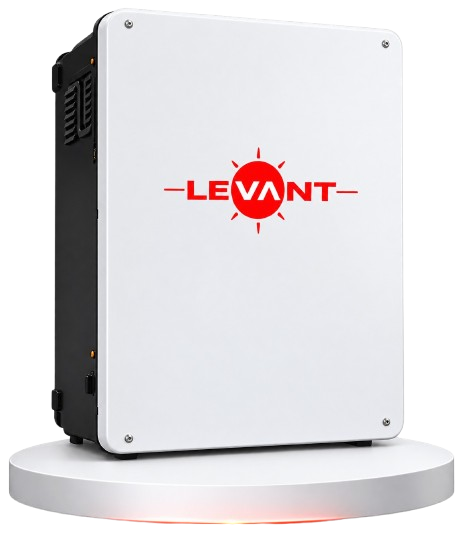
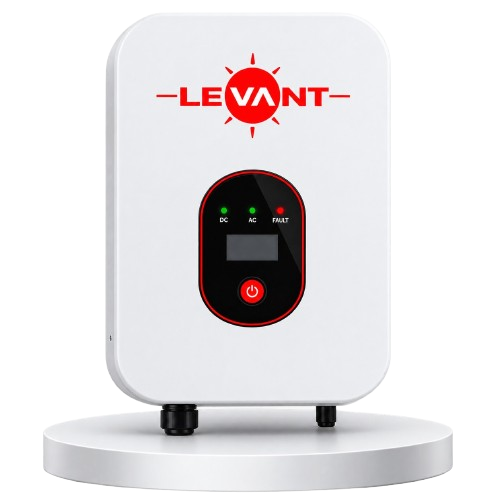
Compare Levant Solar's on-grid and hybrid inverter ranges against the written design rather than selecting by appearance or headline wattage. Confirm availability and current documents with the sales team.
If you need backup, read the battery-sizing guide next. If your main objective is daytime generation, begin with your electricity bills, roof layout and local grid-connection rules. Both routes start with a site-specific assessment.
Useful to someone planning solar? Pass the guide along.