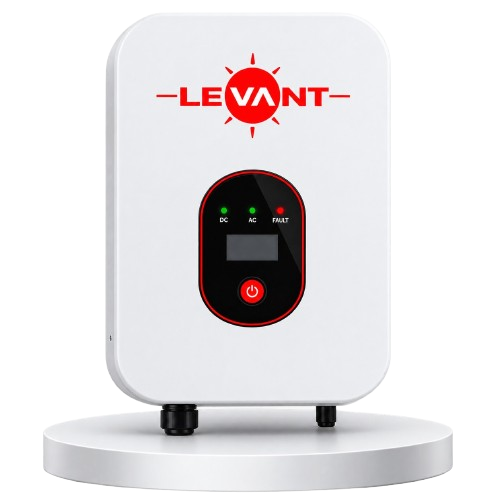
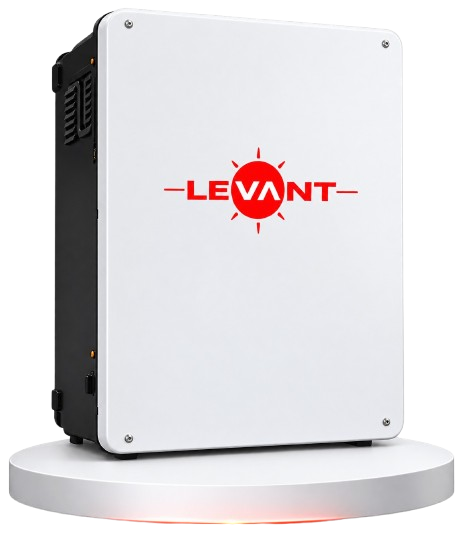
Understand 5.12 kWh LiFePO4 solar battery capacity, estimated backup time, discharge limits and inverter compatibility before choosing home storage.
What does 5.12 kWh mean?
A 5.12 kWh rating describes a quantity of stored energy. It does not mean that the battery can deliver 5.12 kW continuously, nor does it specify how many hours your home will run. Runtime depends on your load, available energy, conversion losses and system settings.
Nominal electrical energy can be calculated from nominal voltage multiplied by amp-hours. For example, 51.2 V × 100 Ah = 5,120 Wh, or 5.12 kWh. Always confirm both figures and the usable-energy specification on the exact battery datasheet rather than assuming all products with similar names are identical.
Estimate backup time with explicit allowances
A useful first estimate is: runtime in hours = nominal battery energy × usable fraction × conversion efficiency ÷ average AC load in kW. Each input needs to match the actual equipment and settings. Do not count uncertain solar generation as guaranteed outage energy.
As an illustration, 5.12 kWh × 0.90 usable fraction × 0.90 conversion efficiency gives about 4.15 kWh for AC loads. At a steady 0.5 kW, that arithmetic suggests about 8.3 hours; at 1 kW, about 4.1 hours. These assumed percentages are not Levant specifications or promised runtimes. Temperature, battery condition, standby consumption and changing appliance demand can alter the result.
Check power limits as well as energy
A battery can have enough energy for a long backup period but still be unable to supply a large instantaneous load. Continuous discharge current, peak-current duration, BMS limits and the inverter's battery-input limits determine what the system can support.
Refrigerators, pumps and other motor loads can draw a starting surge. Ask the installer to check these alongside running loads and voltage behaviour. Adding a larger inverter does not increase a battery's permitted current.
Confirm the exact inverter and battery pairing
LiFePO4 is a lithium-ion battery chemistry, not a universal compatibility standard. The inverter must support the battery's operating voltage, charging requirements and communication arrangement. A matching connector does not prove that two products can work together safely.
Request written confirmation for the specific model combination, including firmware or communication requirements where applicable. Do not assume batteries can be connected in parallel, expanded later or mixed with older units unless the manufacturer explicitly permits the arrangement.
- Confirm nominal and operating voltage, usable capacity and recommended settings.
- Check continuous and peak charge/discharge limits and relevant time limits.
- Verify supported BMS communication and the approved inverter pairing.
- Check installation location, clearances, protection and temperature limits.
- Ask how warranty terms address cycles, throughput, capacity retention and operating conditions.
Plan installation and service, not just capacity
Have battery storage installed and commissioned by a qualified professional following the equipment documentation and applicable Indian requirements. Keep access and required clearances unobstructed. Never open a battery enclosure or alter its protective devices yourself.
The proposal should explain what happens at low state of charge, how the battery recharges, which loads are backed up and whom to contact for fault messages. Keep commissioning records, serial details and warranty documents together for future service.
When should you compare a larger battery?
Consider a higher capacity only after measuring essential loads and choosing the backup duration. Doubling nominal energy can increase estimated runtime under similar conditions, but it does not automatically double permitted output power or remove inverter limits.
Compare Levant Solar's published lithium battery options with the load schedule and exact inverter compatibility information. If you only need daytime grid-connected generation, battery storage may be a separate decision rather than an automatic requirement.
Useful to someone planning solar? Pass the guide along.